
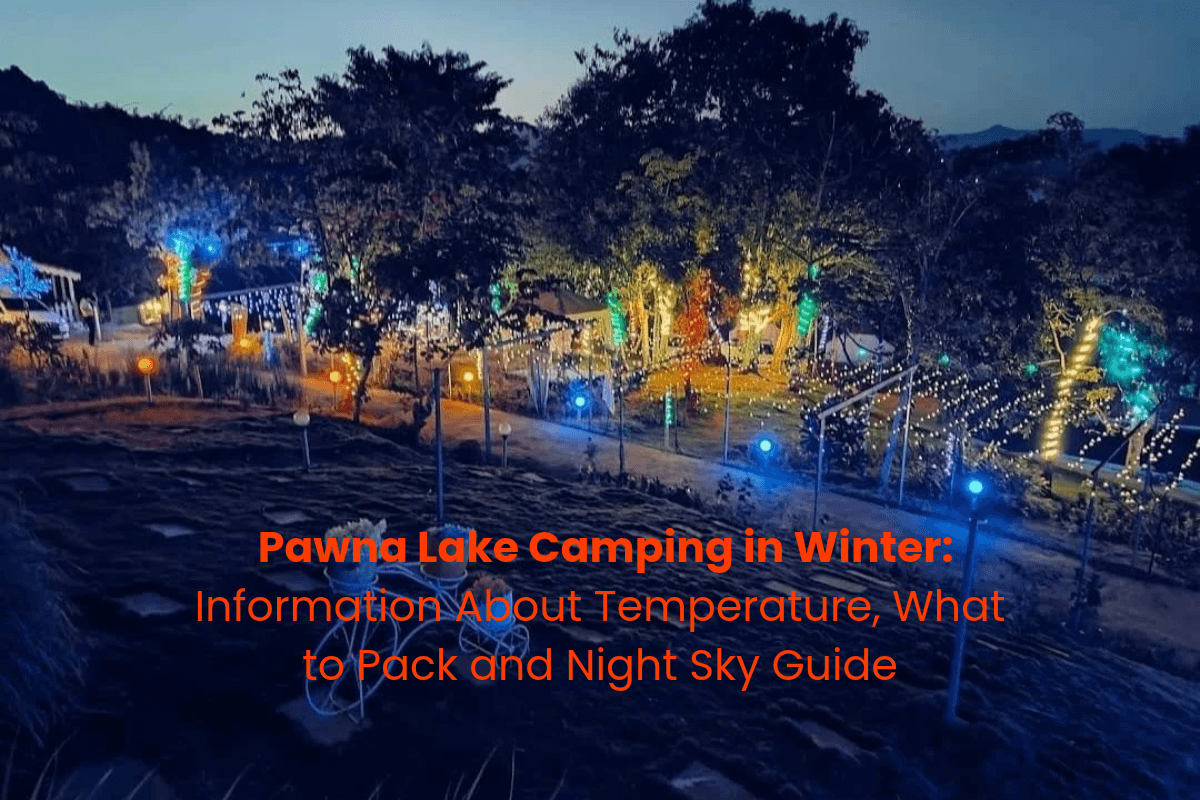
Every year, around the last week of October, as a best pawna lake camping site our phones start ringing with the same three questions. How cold does it get at night? What should we bring? And will we actually be able to see the stars?
We have been running camps at Pawna Lake since 2016, and as per our experience winter is the best season and busiest season for us.. We’ve experienced first-timers arrive in shorts at 4 PM and ask for a second blanket by midnight after the heavy cold. We’ve seen groups skip the bonfire to lie on the grass and count shooting stars. This guide is everything we tell our guests on the phone, written down in one place.
If you’re still deciding between the best season to visit the lake, our season-wise guide to the best time to visit Pawna Lake covers the full year. This post is only about winter, in detail.
Quick Answer: Is Winter a Good Time for Pawna Lake Camping?
Yes. Winter (November to February) is the most comfortable and most popular season for camping at Pawna Lake. Days are sunny and pleasant at around 26–30°C, and nights drop to roughly 9–15°C, with the coldest hours just before sunrise. Skies are clear on most nights, which makes it the best season for bonfires and watching the stars. We recommend you to pack one warm layer more than you think you need, book weekends early, and plan your trip around a new moon if you want to experience the star view at night.
How Cold Does Pawna Lake Get in Winter?
Pawna lake is always colder than most people expect, but never harsh. Pawna lake is near pune and mumbai and people always assume the temperature will be the same at pawna lake as pune and mumbai. Pawna sits in the Maval hills, around 25 km from Lonavala, and the open water of the reservoir makes the air near the shore feel cooler and damper than it does in town.
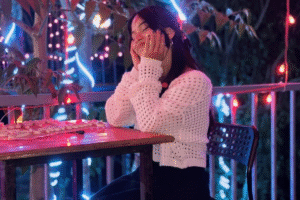
What surprises most guests isn’t the temperature on the forecast. It’s how fast it drops after sunset. Around 5:30 PM the lake still feels warm. By 8 PM, when the BBQ is on the grill, most people have pulled on a jacket. Between 3 AM and 6 AM it is at its coldest, and that’s when a thin blanket stops being enough.
The numbers below are the typical ranges we see at our campsite each year. A cold wave can push nights a few degrees lower in late December and January, so always check the forecast for Kamshet or Lonavala a day before you leave.
Pawna Lake Winter Temperature, Month by Month
| Month | Daytime | Night / early morning | What to expect |
| November | 28–30°C | 14–17°C | Pleasant, lake still full after the monsoon, hills still green. A hoodie is enough. |
| December | 26–28°C | 10–13°C | Proper winter nights, fog on the lake most mornings, peak crowds near Christmas and New Year. |
| January | 26–29°C | 9–12°C | Usually the coldest month. Heavy dew, crisp mornings, clearest night skies. |
| February | 29–32°C | 12–15°C | Warmer days, cool nights, fewer crowds. A good month for quieter weekday trips. |
What a Winter Night at Camp Actually Feels Like
Here’s how a typical winter stay plays out with us, so you know what to dress for and when.
4:00 PM, check-in.
It’s warm enough for a T-shirt. This is the best time for games like volleyball, archery and badminton, because the sun is soft and the ground is dry.
5:30–6:15 PM, sunset.
Winter sunsets over Pawna are the clearest of the year, with no monsoon haze and no summer dust. Most guests walk down towards the water at this time. The temperature starts to fall the moment the sun goes behind the hills.
7:00–8:30 PM, BBQ.
This is when you’ll reach for your jacket. Sitting near the grill helps.
9:00–11:00 PM, music and dinner.
Dinner is served hot, and on a cold night you’ll understand why everyone goes back for a second round of chicken curry or paneer.
After dinner, bonfire.
The common campfire is the warmest place at camp. It’s also where most guests stay till late, so it’s worth bringing a shawl or a blanket to sit on.
Midnight to 6 AM.
This is the cold stretch. Dew settles on everything: tent flaps, shoes left outside, the car windscreen. Keep your bag zipped and your shoes inside the tent.
6:30–7:30 AM, sunrise and fog. I
f you’re willing to step out of a warm blanket, this is the most beautiful hour of a Pawna winter. A layer of mist sits on the lake and slowly lifts as the sun comes over the hills. Hot water for bathing is available, which helps a lot on a January morning.
9:00 AM, breakfast.
Hot poha and tea, and by now the day is warming up again.
Which Stay Is Best for Winter Camping at Pawna Lake?
All our tents come with proper bedding, and we hand out blankets in winter. Still, different stays suit different people in the cold.
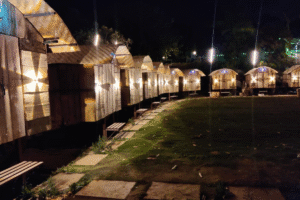
- Tents (Regular, Deluxe, Swiss): The classic Pawna experience and the best value. Tents feel cozy once you’re inside with the flap closed, but you’ll feel the night air more. Best for friends’ groups and couples who want the real camping feel. Bring your own extra layer. See camping packages
- Wooden Cottages: Solid walls hold warmth better than canvas. A good middle ground for families who want lake views without the chill.
- Triangle House Cottage: The most comfortable option for winter, with an attached washroom. Ideal if you’re travelling with young kids or older parents.
- Campsite with Free Boating: We tag this one “best for winter” because the lake is calm and the afternoons are perfect for a boat ride before the evening cools down.
Travelling with children or elderly family members? Read our guide to Pawna Lake camping for families. For couples, this page explains which stays offer more privacy.
What to Pack for Pawna Lake Camping in Winter
Most packing lists online are written for every season at once. This one is written for a single winter night by the lake. It’s based on what our guests most often wish they’d brought.
Clothing
- A proper warm jacket or fleece. Not just a light sweatshirt. This is the most common thing people regret not bringing.
- One thermal inner or an extra full-sleeve layer for the night, especially in December and January.
- A cap or beanie and warm socks. You lose a lot of heat through your head and feet when sleeping in a tent.
- Track pants or full-length bottoms for the night. Save the shorts for the afternoon.
- A shawl or light blanket for sitting around the bonfire. Many guests use it as an extra layer in the tent too.
- Closed shoes or sneakers. Grass is wet with dew in the morning, and slippers get soaked.
- One change of clothes, in case the morning dew gets to your first set.
Personal care
- Moisturiser and lip balm. The dry, cold air cracks lips fast.
- Sunscreen and sunglasses. Winter afternoon sun on the water is stronger than it feels.
- Your regular medicines, plus something for a cold or a sore throat if you’re prone to it.
- Mosquito repellent. There are fewer mosquitoes than in the monsoon, but they’re still around near the water at dusk.
Gear and gadgets
- Torch or headlamp. You’ll need one for walking to the washroom at night and for the lakeside after dark. A red-light torch is even better for stargazing (more on that below).
- Power bank. We have charging points, but batteries drain faster in the cold, especially if you’re shooting night photos.
- A zip-lock or plastic pouch for your phone and wallet, to keep them dry from dew overnight.
- A mat or old bedsheet if you plan to lie on the grass and watch the stars.
For kids and pets
- An extra sweater and a monkey cap for children, since they feel the cold faster and rarely say so until they’re shivering.
- Our campsites are pet-friendly. If you’re bringing your dog, pack its blanket or bed so it isn’t sleeping on cold ground.
What you don’t need to bring
Food, drinking water and basic bedding are all included in your package. You don’t need to carry a sleeping bag. If you feel the cold more than most, though, your own blanket or a light sleeping bag won’t go to waste.
Pawna Lake Night Sky Guide: Stargazing in Winter
This is the part of a winter trip that most guests don’t plan for, and it often ends up being their favourite memory. Pawna is far enough from Pune and Mumbai that on a clear winter night, you can see far more stars than you ever will in the city. Winter gives the clearest skies of the year, because the monsoon clouds are gone and there’s very little dust or haze in the air.
Why winter is the best season for stargazing at Pawna
- Clear skies. From November to February, most nights are cloud-free.
- Long nights. It gets dark by around 7 PM, so you have hours of sky before you even think about sleeping.
- The bright winter constellations. Some of the most recognisable star patterns in the sky are up on winter evenings.
What you can see from the campsite
You don’t need a telescope or an app to enjoy these. Give your eyes 15–20 minutes away from bright lights and look up.
- Orion (Mriga, or “the deer” in Marathi and Indian astronomy). The easiest one to spot. Look for three bright stars in a short, straight line, the “belt”. It rises in the east in the evening and climbs high by midnight in December and January.
- Sirius (Vyadh, “the hunter”). The brightest star in the night sky. Follow Orion’s belt down and to the left and you can’t miss it. It often twinkles in different colours when it’s low on the horizon.
- The Pleiades (Krittika). A small, tight cluster of blue-white stars that looks like a tiny smudge at first glance. Most people count six or seven stars with the naked eye. Find it above and to the right of Orion.
- Aldebaran (Rohini). A reddish-orange star sitting between Orion and the Pleiades.
- Planets. Planets shine steadily instead of twinkling. Through the 2026–27 winter, look for Saturn in the western sky in the early evening and Jupiter rising in the east later at night.
Winter 2026–27 stargazing calendar
The moon makes the biggest difference to what you’ll see. A full moon lights up the lake beautifully, and it’s lovely for a moonlit walk, but it washes out all but the brightest stars. For the best stargazing, plan your trip within three or four days of a new moon.
| Date | What’s happening | Stargazing quality |
| 9 November 2026 | New moon | Excellent dark skies for the week around it |
| 24 November 2026 | Full moon | Great for moonlit lake views, poor for stars |
| 9 December 2026 | New moon | Excellent |
| 13–14 December 2026 | Geminid meteor shower peak | Excellent. Only a thin crescent moon that sets early, so skies stay dark. The best night of the year for shooting stars. |
| 24 December 2026 | Full moon | Poor for stars |
| 3–4 January 2027 | Quadrantid meteor shower peak | Good. A thin waning moon. Short peak, best before dawn. |
| 8 January 2027 | New moon | Excellent, with the coldest, clearest skies of the season |
| 22 January 2027 | Full moon | Poor for stars |
| 6 February 2027 | New moon | Excellent |
| 20 February 2027 | Full moon | Poor for stars |
The one to plan around: the Geminids, 13–14 December 2026. The Geminids are usually the strongest meteor shower of the year. In 2026, the moon will be a thin crescent that sets early in the evening, so the sky stays dark for most of the night. The meteors build up through the night and are at their most active after midnight and in the early hours before dawn. Under a dark sky, you can see dozens of shooting stars in an hour. If you’ve never seen a proper meteor shower, this is the weekend to book. Plan ahead, because it falls on a Sunday night and the weekend before it fills up.
Stargazing tips from our campsite
- Walk away from the lights. The tent area has lights for safety, so step a little towards the open ground by the lake, or ask our staff where the darkest safe spot is that night. Don’t wander alone to the water’s edge in the dark.
- Look away from the city glow. On clear nights you’ll notice a faint orange glow low on the horizon towards Pune and Lonavala. The darkest parts of the sky are directly overhead and towards the hills.
- Give your eyes 20 minutes. Every time you look at your phone screen, your night vision resets. Turn the brightness all the way down or use a red-light torch.
- Lie down. A mat or bedsheet on the grass is far more comfortable than craning your neck. Bring your bonfire shawl.
- Wait until after dinner. By 10–11 PM the sky is darker and the winter constellations are higher. For meteor showers, the hours after midnight are best.
- For night photography, use a tripod (or rest your phone against something steady) and your phone’s night mode. A 10–30 second exposure from the shore can catch stars reflected in still water on a calm night.
Winter Trips Around Pawna Lake
Winter is the best season for the forts around the lake. The trails are dry, the air is cool and the views are at their sharpest.
- Tikona Fort (about 5 km from the lake): Our top pick for a winter morning. Start early after a quick tea, catch the mist lifting off Pawna from the top, and be back in time for breakfast. It takes about 1.5–2 hours to reach the top at a steady pace.
- Tung Fort: A steeper, quieter climb with a dramatic view of the reservoir.
- Lohagad and Visapur: Easy to combine on your way back towards Lonavala.
Our complete Pawna Lake guide covers these and other nearby places in more detail. If you’re curious how the lake itself came to be, read the history of Pawna Lake and Pawna Dam.
Practical Tips for Winter Camping at Pawna Lake
- Book weekend camping early. Campsites in winter Saturdays sell out first, especially from mid-December to the first week of January. Christmas week and New Year camping usually fill up two three weeks in advance.
- Try a weekday. A Tuesday or Wednesday night in January gives you the same cold, clear sky with a much quieter campsite and costs are also a little lower on weekdays.
- Drive carefully in the morning fog. On a few December and January mornings, visibility on the roads around Pawnanagar and Kamshet drops for an hour or two after sunrise due to heavy fog. Leave a little later, or drive slowly with your headlights on. Our How to Reach page has the route details.
- Arrive before dark. It gets dark early in winter, and the last stretch to the campsite is easier to find in daylight.
- Stay hydrated. Cold weather makes people drink less water, and you’ll feel the difference by morning.
- Follow staff guidance near the water. The lake is calm in winter, but it’s cold and deep. Swimming or wading at night is not allowed. Our honest safety guide explains how we run the campsite after dark.
- First time camping? Read our dos and don’ts for first-time campers before you visit the pawna lake camping.
Our Honest Take on Winter at Pawna
If we had to pick one season for someone’s first camping trip, it would be winter, specifically a weekday in January, close to a new moon. You get the cold, the bonfire, the fog on the lake in the morning and a sky full of stars. The monsoon has its own magic (we wrote about it in our monsoon camping guide), but winter is the season when everything at Pawna simply works.
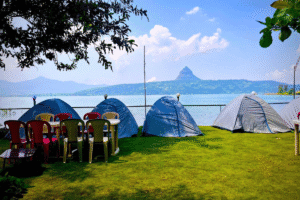
Pack one more layer than you think you need, keep your phone in your pocket for an hour after dinner, and look up.
Planning a winter trip? Check our current Pawna Lake camping packages or call or WhatsApp us on +91 83907 54855. We’ll tell you honestly what the weather is like that week and which stay suits your group.
Frequently Asked Questions About Pawna Lake Camping in Winter
What is the temperature at Pawna Lake in winter?
Daytime temperatures are usually 26–30°C, and nights fall to around 9–15°C. January is generally the coldest month, and the hours between 3 AM and 6 AM are the coldest part of the night.
Is Pawna Lake very cold at night in December?
It’s cold enough that you’ll want a proper jacket, warm socks and a cap, but it isn’t extreme. Nights in December usually fall to 10–13°C. Blankets are provided in tents, and the bonfire keeps the evening comfortable.
Are blankets provided for winter camping at Pawna Lake?
Yes, bedding and blankets are part of every tent stay with us. If you feel the cold easily, bring an extra shawl or a light blanket of your own.
Can I see stars at Pawna Lake?
Yes. On clear winter nights you can easily see Orion, Sirius, the Pleiades and often planets with the naked eye. For the darkest skies, plan your trip close to a new moon. In winter 2026–27, new moons fall on 9 November, 9 December, 8 January and 6 February.
When is the best time to see shooting stars at Pawna Lake?
The Geminid meteor shower on the night of 13–14 December 2026 is the best opportunity of the year, with dark skies since the moon sets early. Watch from late evening until dawn, with the most meteors after midnight.
Is winter camping at Pawna Lake suitable for kids and elderly people?
Yes, as long as they’re dressed warmly. For young children and older family members, we recommend a cottage stay rather than a tent, because it holds warmth better and has an attached washroom.
Is hot water available at the campsite in winter? Yes, hot water for bathing is available, which makes early mornings much more comfortable.
Do I need to book in advance for winter weekends?
Yes. Winter weekends, especially from mid-December to early January, fill up fast. Booking two to three weeks ahead is safest. For New Year’s Eve, book as early as you can. You can find more answers on our FAQ page.


