Ask around and you’ll get two very different opinions about Pawna Lake in monsoon. Some people will tell you it’s the most beautiful the lake ever looks. Others will tell you to wait for winter and avoid the rain altogether. Both are a little bit right, which is exactly why this guide exists.
We run camps here through the year, so we’ve seen what monsoon actually does to this place, the good parts and the parts that need real planning. If you’re trying to decide whether pawna lake camping in monsoon is worth it for you, here’s what to expect before you book.
Is Pawna Lake Camping in Monsoon Actually Worth It?
Short answer: yes, if you go in with the right expectations. The hills around the lake turn from dusty brown to deep green within a couple of weeks of the first showers. The lake fills up close to its brim, small waterfalls show up on slopes that look completely bare in summer, and the air smells like wet earth the whole time you’re there. It’s a genuinely different version of Pawna than the one you see in winter photos.
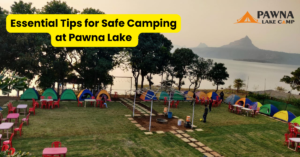
What it isn’t, is a guaranteed dry weekend. Rain in the Sahyadris doesn’t follow a strict schedule, and a trip here in July can mean anything from a light drizzle to a full day of steady rain. Camps that are set up properly for the season, with tents pitched on raised or covered ground and rain covers in place, handle this well. That’s actually why we keep specific tent types, like our triangle tents and Swiss tents, running through the rainy months instead of shutting the camp down. If a campsite tells you outdoor camping fully stops in monsoon, that’s often more about their setup than about the season itself.
Pawna Lake Monsoon Timeline: June to September
Monsoon at Pawna doesn’t behave the same way in every month it covers. Here’s a realistic month-by-month picture.
June (second half): The first showers arrive and the hills start turning green almost immediately. Rain is usually lighter and more intermittent than what’s coming in July, which makes this a gentler introduction to monsoon camping.
July: This is peak monsoon. Expect the heaviest and most frequent rain of the season, a lake at its fullest, and the greenest landscape you’ll see all year. It’s also the month where you should be most flexible with your plans, since a full day of rain isn’t unusual.
August: Still wet, but with longer dry stretches between spells of rain compared to July. Mornings are often clearer, which makes early risers happy if photography or a short walk is on the agenda.
September (first half): Rain starts tapering off while the greenery is still fully intact. This is usually the easiest monsoon month to plan around, since you get the scenery without quite as much unpredictability.
If this is your first monsoon trip to Pawna, late August or early September tends to give the best balance of good views and manageable weather.
What Changes at Pawna Lake in Monsoon
A few things about the experience shift noticeably once the rains set in, and it helps to know about them ahead of time.
- Water activities need a weather check. Boating and similar lake activities can be paused during heavy rain or when water levels rise sharply, purely for safety. Always confirm availability for your specific dates when you book rather than assuming it’ll be open.
- Swimming isn’t allowed at any time of year at Pawna, and this matters even more in monsoon, when the water is deeper and currents can be stronger near the edges.
- Fort treks need more caution. Trails to Tikona, Lohagad, and Visapur look stunning in the rain, but rock steps get slippery and some sections turn into small streams. These treks are doable with the right footwear and a bit of caution, but they’re not the season to attempt them in flip-flops or with young kids in tow.
- Leeches show up on forest trails between July and early September, especially after a spell of rain. Long socks tucked into your shoes handle this easily.
- Crowds thin out on weekdays. Monsoon is technically the off-season for a lot of travelers, so weekday bookings often mean a quieter campsite and more relaxed service. Weekends can still get busy, especially in August and September.
Nearby Waterfalls and Views Worth the Trip
Monsoon is when this whole region shows off, and a few spots are worth building your itinerary around.
- Seasonal waterfalls appear on hillsides and along the road from Lonavala that simply don’t exist the rest of the year. Some of the smaller streams near Thakursai village are worth a stop on your way in.
- Tung Fort and Tikona Fort trails turn genuinely scenic in the rain, with wildflowers and running water along the path for anyone comfortable with a monsoon trek.
- Pawna Dam itself looks completely different when full, with the surrounding hills wrapped in low cloud most mornings.
If photography is part of why you’re visiting, early morning is your best window. Mist sits over the lake right after sunrise before it burns off, and that’s usually the most dramatic light you’ll get all day.
What to Pack for Pawna Lake Camping in Monsoon
Keep this list practical rather than exhaustive:
- A raincoat or poncho (umbrellas don’t hold up well on open ground or during a trek)
- Quick-dry clothing and at least one spare set
- Waterproof or quick-dry footwear with decent grip
- A dry bag or a few large ziplock bags for your phone and wallet
- Mosquito repellent and a small first-aid pouch
- Long socks if you’re planning a fort trek
- A torch, since power can flicker during heavy rain
- A light jacket for the evening, since temperatures drop a little after the rain settles
Getting There Safely in Monsoon
The drive from Pune takes a little longer than usual in the rain, so build in extra time rather than rushing. Roads leading into the campsite can get muddy in patches, and driving after dark is best avoided in this season since visibility drops and the narrower stretches near the lake aren’t well lit. If you’re travelling by train, reaching Lonavala or Kamshet by rail and taking a private jeep the rest of the way is usually more reliable than driving the entire route yourself in heavy rain.
Food That Hits Differently in the Rain
There’s something about hot food and a bonfire that feels better in monsoon than in any other season. Expect the usual campsite spread, tea and pakoda through the evening, a barbecue once the rain eases up, and a hot dinner that tends to disappear faster than it does in winter. If you get a break in the rain, sitting by a covered common area with a cup of ginger chai while it pours around you is, honestly, one of the better small pleasures of camping here.
Weekday or Weekend: Does It Matter More in Monsoon?
It does, a bit more than in other seasons. Weekday trips in July and August tend to be quieter, both in terms of crowd and in terms of getting more attention from the camp staff if the weather turns and plans need adjusting. Weekends, especially in August and September once word gets around about how green everything looks, can fill up fast, so book a few days ahead if a weekend is your only option.
Our Honest Take
If you’ve already experienced Pawna Lake camping in winter and want to see a completely different side of it, monsoon is worth the trip. Go in expecting some rain, pack for it properly, and pick a campsite that’s actually set up for the season with covered, waterproof tents, not one that’s just hoping the weather cooperates. Late August through early September is the easiest window if this is your first monsoon visit, while July rewards anyone who wants to see the lake and hills at their most dramatic.
Frequently Asked Questions
Is Pawna Lake camping open during monsoon?
Yes. Camps that use raised or covered tent setups, like triangle tents and Swiss tents with rain covers, continue to operate through the monsoon months.
Which month is best for Pawna Lake in monsoon?
Late August to early September usually offers the best balance of green scenery and more manageable rainfall, making it a good starting point if this is your first monsoon trip.
Is it safe to camp at Pawna Lake in the rain?
Yes, as long as you choose a campsite with proper waterproof, covered tents and follow basic precautions like avoiding the water’s edge, wearing grippy footwear, and not attempting fort treks during heavy rain.
Can you go boating at Pawna Lake in monsoon?
Boating availability can depend on rainfall and water levels on a given day. It’s best to confirm with your campsite for your specific travel dates rather than assuming it will be running.
Are there leeches at Pawna Lake in monsoon?
Leeches can be present on forest and fort trekking trails between July and early September, especially after rain. They’re generally not an issue around the campsite or common areas. Long socks tucked into your shoes are an easy fix.
Do I need a 4×4 to reach Pawna Lake in monsoon?
No, a regular car can make the trip, though the last stretch of road can get muddy in patches. Driving during daylight and taking it slow on the final approach is usually all that’s needed.
Planning your monsoon trip? Check current Pawna Lake camping packages and tent availability, or reach out to our team for the latest weather and road updates before you book.